Events

ICON-S Annual Conference, Dublin 29 June 2026
Roundtable: Planetary Thinking and the Law: Earth, Space, and Place
This roundtable invites open conversation on how planetary thinking reverberates, in diverse and contradicting ways, through engagements with law.
Earth systems, planetary boundaries, tipping points, the ‘Anthropocene’, more-than-human rights, inter-generational, remedial, and multi-species justice, repair, transformation, resilience and care are among the active agendas that reference the planetary. As theoretical perspectives and political claims enrol map-making and modelling as techniques of representing, enacting, and ordering the planetary, they raise questions of epistemic justice and recognition while exposing power relations that underlie systems of control, supply and demand. Planetary thinking, in short, unsettles core structuring concepts that have sustained legal orders, demanding critical as well as speculative engagement.
Co-Conveners: Angelina Fisher (NYU), Yirong Sun (Cambridge), Gabriele Wadlig (Dresden)
To Write the Earth: Law, the Global, and Planetary World-Making
European University Institute, 26-27 June 2026
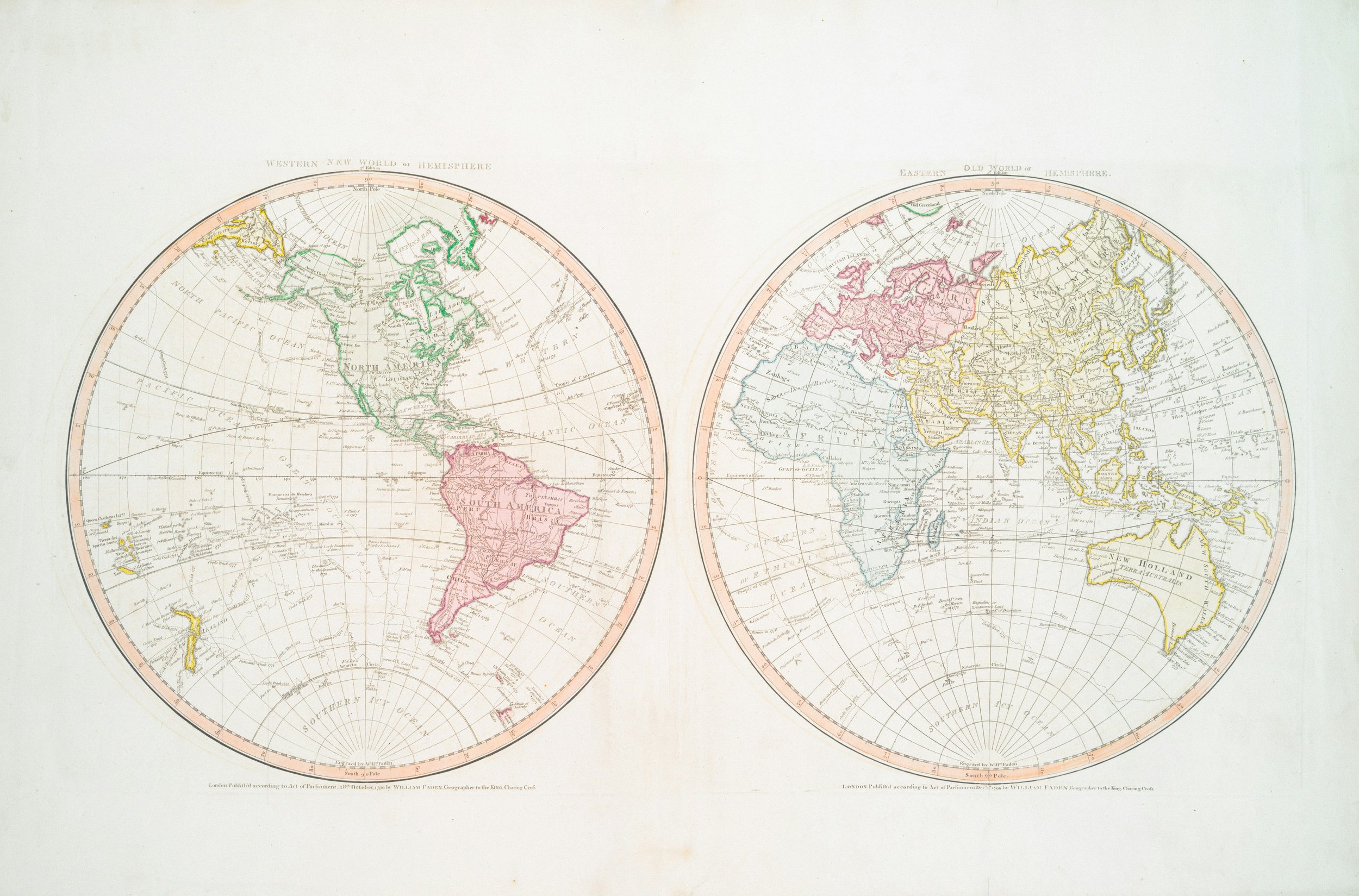
This workshop invites participants to examine how diverse practices of earth-writing - cartographic, legal, literary, scientific, ecological, and infrastructural - stabilize or unsettle the relationship between law, the global, and the planetary.
As climatic destabilization intensifies, the language of the “planetary” has emerged as a conceptual alternative to the “global”, which had itself emerged as an alternative to the “international”. Yet these semantic shifts remains superficial if they do not grapple with the deeper conceptual question: How is the earth written, by whom, and to what ends? And how is it written through law? What, precisely, distinguishes the planetary, the global, and the international—and how might these distinctions matter for legal thought and practice? What does it mean to think of the planetary as something other than the global enlarged? How does “planetary law” depart or intersect with other naming projects such as “global law” and “transnational law”? And what forms of law and authority become possible when the earth is understood as a site of multiple and contested writings?
The full abstract and call for papers is available here.
Re-imagining Order in a Planetary Era: Law, Justice and Institutions
Oxford University, 14-15 May 2026
This workshop follows gatherings convened in Berlin (2024) and Oxford (2025). It brings together an interdisciplinary group of scholars from international law, international relations and history to present chapters-in-development for an edited volume on law, justice and institutions in an era of planetary ordering.

inconversation with the Multi-Species Collective
ONLINE SEMINAR, 11 Feb 2026 17-18 (amsterdam time)
What Can International Climate Law Learn From Plankton and Penguins?
On the Im/Possibilities of Registering More-than-Human Temporalities
How might international climate law begin to register more-than-human temporalities – those distant pasts, deep futures, and multispecies rhythms that shape planetary processes? While geological archives and affective encounters offer fleeting access to these unfamiliar and strange temporal scales, legal frameworks continue to privilege human-centred notions of time. In the context of international climate law, symbolic references to ecosystems and invocations of ‘Mother Earth’ have not unsettled tacitly inscribed anthropocentric assumptions.
Drawing on two narratives – of plankton sedimentation and a penguin colony – this talk shows how human and other-than-human temporalities are ‘entangled’ and why legal responses to climate change must begin to register these temporal relations. It argues that because human perception and embodied experience of time is unavoidably anthropocentric, the project of recognising more-than-human temporalities does not consist of transcending the anthropocentric horizon but acknowledges its limitations. From this starting point, the task becomes one of engaging these limits as openings to develop ways for legal norms and processes to knot together human and other-than-human times.
Online participation is possible.

European Law Unbound
Annual Conference 2025, Prague - 25-27 Sep 2025
Roundtable on ‘Planetary Europe’
Organizer: Benedict Kingsbury (NYU)
Discussants: Andreas Buser (FU Berlin), Marie Petersmann (LSE), Laura Mai (Tilburg)
‘Planetary’ referents have rippled from science and cosmologies into much wider societal awareness, and have become important in European political discourse, policy, and law. This has manifested in green deal initiatives, climate litigation, and struggles over ‘earth systems law’, ‘planetary boundaries’, and ‘just transitions’. Planetary thought brings with it the simultaneity of multiple previously-separate temporalities, along with new puzzles of scale and scaling, so that established modes of ordering and of law need to be rethought. At the same time, Europe is galvanized by renewed concerns about war, borders, democracy, rearmament, military alliances, critical supplies, geoeconomics, and nationalisms. The ‘planetary’ dimensions of European thought and practice are now jostling among the demands and convulsions of resurgent concerns with the national, regional, international, and global. This Roundtable discussed the possibilities and implications for law and legal ordering of, through, and with the planetary in the European context.